68. Season of mists and mellow fruitfulness – riding in fog

Fog remains one of the trickiest hazards for motorcyclists, particularly at night or in low-light conditions. Research supports my discussion of visual disorientation and increased reaction time. Modern lighting may help see, high-visibility gear might help others see us — hardly any bikes have a fog light, but the core principles haven’t changed: reduce speed, generous following distances, and riding to what we can actually see, not what we expect. Ultimately, preparation and anticipation remain the rider’s best defences—fog is never enjoyable, but with forethought, it can be managed reasonably safely.


Season of mists and mellow fruitfulness – riding in fog

I’m pretty sure Keats didn’t ride a motorcycle, but it’s not unusual for spells of settled weather to develop during late on in the autumn, and fog can be a major problem. I still remember two trips vividly. Years ago, when I was only a few months into my riding career, I rode from Maidstone in Kent to West Drayton near Heathrow. The ride took twice as long as expected because the fog came down, and I very nearly didn’t make it. Following the kerb along the inside lane of the A40, I didn’t notice I had drifted off the main carriageway into a slip road. I nearly collided with the Armco barrier on the corner. Thankfully because of the thick fog, I was only riding at about 20mph and took some evasive action. A few years later when I was despatching, I took a package from London to GCHQ at Cheltenham. I left in lovely afternoon shine. I got to Cheltenham in time for a beautiful sunset. And the return ride turned into a nightmare of freezing fog, accidents and traffic jams. So riding in fog and particularly in fog at night, is probably my least favourite part of biking. And if I can, I’ll stay put. But sometimes it has to be done. So what are the problems and how best to deal with them?

Fog forms when moist air travels over colder ground. Although we could encounter for at any time of year, the densest fog often forms in autumn – November is a favourite month for fog. Warm air can still make its way up from the near-continent and it holds more moisture than during the winter months. But the nights are long and fog forms more readily than in summer, and it can be slow to clear – it may even persist all day.

Like all other weather-driven hazards, first stop is the weather forecast. Forewarned is forearmed. Find out what the day-long forecast is. Whilst fog may be slow to clear in the morning, it’s pretty obvious when we wake up in it. But if the weather changes and become clear and still during the day, fog can easily be a problem on the dark ride home. Maybe we can change our departure times.

Towns are generally a bit warmer than the surrounding countryside so it’s not uncommon to drive out of town into fog. We can anticipate where we’re likely to find it. It can be low cloud, so worse on tops of hills. Or it can be caused by cold air that’s sunk into low-lying areas after a still, clear day – damp meadows and river valleys are classic places for fog to form on still evenings. Or it can be blown in off the cold sea. Kent, where I lived for many years, used to get all three types. For example, the M2 being near the coast would often be affected with sea-fog. But the M20, being a few miles inland and crossing the North Downs, was often affected by hill-fog. Watch out for patchy fog, because we never quite know where it is, how thick it is, or how long it’ll last. Don’t be tempted to blast into a wispy looking bit of mist drifting across the road. It could be a lot thicker than you think.

It’s often cold riding in fog, thanks to chill air temperatures, but also because the tiny droplets evaporate from clothing and suck away body heat. If riding in leathers, put waterproofs on, and layer up to stay warm.

On the bike, the first problem is simply seeing out the helmet. The visor gets covered with water droplets on the outside and mists up on the inside from your breath.

Wax polish like Mr Sheen on the outside helps the water bead up and run off, often just by turn our head. Try to avoid wiping a finger – the oily crud on the glove gets smeared across the visor and makes it even more difficult, and long term it scratches it. If the visor gets covered in salt spray or road film, a damp cloth kept in a ziplock bag (I spray that with Mr Sheen too) can clean and re-wax the visor.

Holding our breath all the way home is impractical, and I’ve never yet found a helmet that demisted itself from the vents that were supposed to perform that trick. Breath deflectors also help, but an anti-mist treatment is usually needed. Whilst they do seem to work, they need regular reapplication. Quite honestly, I used Fairy Liquid as a courier, applying a dab of the neat stuff, then polishing it on with a clean cloth. The other option is a Fog City-style add-on. It’s effectively double-glazing for the visor, but I’ve found that at night they reduce visibility, partly because they scratch easily. I’ve heard they can be tricky to seal effectively on some visors.

Having sorted yourself out, make sure the bike is in good shape too, with clean and properly adjusted lights. If dip beam is too low we won’t get any forward vision. If it’s too high, even on low beam it will light up the fog – now the light’s bounced back as glare. Extra-bright lights can actually be a disadvantage when this happens.

One of the problems of riding in fog is a sense of ‘dislocation’. A road we’ve ridden dozens will seem totally different in fog, as our normal visual cues will vanish. So use everything available. Reflective posts are red to the left and white to the right, so if we see a line of red posts, we’re approach a right-hander. And vice versa. Triangular warning signs are reflective and are there to flag up hazards. Watch the centre line – longer ‘hazard lines’ indicate just that, and cat-eyes get closer together too when approaching a hazard, and really close – almost a solid line – when the centre line goes solid. Coloured cat-eyes help on multi-lane roads – red to the left, amber to the right, white between lanes, green where vehicles leave or join a carriageway. Ride to what you can see, not what you think you ought to see.

In general I try to follow the centre line rather than the left hand edge of the road – it keeps you further from dangers to the left which will be harder to see – but be cautious entering cross-hatched zones in the middle – there may be unlit traffic islands in the centre of the road.

Unless we meet someone with no lights, it’s usually easy to see oncoming cars, but side-on there’s little to warn us. We can normally see the tail lights of cars ahead, but don’t simply follow the guy in front – if they run off the road, so will we. Fog’s water so it makes the road surface damp, and potentially very slippery, so a good following distance is important.

We need to remember that with no fog light, the driver behind us will have difficulty seeing us against the brighter lights ahead in a queue of traffic. If we do a lot of foggy miles it might be worth fitting one – I used to fit a fog light as a courier. I’ve also seen riders using bicycle LEDs and was surprised how effective they were, although technically they are illegal if fixed to the bike. Typically, reflective material on hi-vis vests is too high up when everyone is driving on dip beam or fog lights – it needs to be low down to be seen.

And finally, make sure the bike’s easy to ride. Many riders use ‘rat bikes’ for winter riding, but make sure everything works properly – we need every ounce of attention for riding, not to worry about stiff clutches, dodgy brakes or cheap and nasty tyres.

Riding in fog is never fun, but we can make it less stressful.


65. Seven reasons SMIDSYs happen

This is another early article which seeks to understand the ‘Sorry Mate I Didn’t See You’ SMIDSY collision between a motorcycle and a car, and to go beyond the simplistic “the driver didn’t look / didn’t look properly” ‘explanation’ relied on by road safety. SMIDSYs remain the leading cause of motorcycle crashes at junctions. The focus on human perception limits, positioning, and proactive riding is fully consistent with modern collision research and advanced rider training. A few years back I gave it a mild re-write to make it a little clearer, fixed some typos and added some extra comments based on my more recent investigations on motion camouflage, peripheral blindness, saccadic masking, size-arrival effect, and workload. The analysis remains accurate and supported by contemporary cognitive science and traffic psychology. As I explained in the earlier article, it’s important for us motorcyclists to realise that the SMIDSY is a ‘Two to Tangle’ collision. That is, if the driver SETS UP the conditions in which a crash CAN happen, the motorcyclist still has to RIDE INTO IT to complete it. That means most junction collisions are avoidable.


Seven reasons SMIDSYs happen

Another day, another ‘biker down’ forum thread. What happened? The rider is minding his own business on a main road, a car pulls out from left, the rider doesn’t manage to take evasive action and takes a trip to hospital in the back of an ambulance. It’s so common, it’s something that virtually all riders are aware of.

Unfortunately, along with the ‘get well soon’ messages, it also generated the usual non-thinking “drivers kill bikers” responses. So, let’s drag ourselves out of the blame culture the entire country seems to be slipping into, and see if we can work out why the “Sorry Mate, I Didn’t See You” SMIDSY crash is still happening, one hundred years after the first intrepid riders powered off on two wheels.

One of the common factors revealed by accident analyses by expert collision investigators is that many of these crashes COULD be avoided IF the rider:

  • saw it coming
  • responded in time

But looking at crash stats we’re no better at avoiding them than motorcyclists back in the 1950s. Collisions at junctions remain the most common collision between a car and a bike. So here are SEVEN REASONS SMIDSYs HAPPEN.

There are some pretty well-documented problems.

1 – the ‘See and Be Seen’ issue – we have to be where the driver can physically see us for him to have a chance.

This is still one of the toughest concepts for riders to get their heads round, not least because so many safety campaigns are aimed at drivers and telling them to ‘look twice’ or ‘look harder’ for bikes. But it’s no good the driver looking harder if we’re in the wrong place. If the driver’s to have a chance of making the right decision, we have to open up a line of sight to the driver’s eyes. Before anything else, we need to do is to LOOK for places where vehicles pull out. If we do that, then we can work out what the driver can and can’t see, and POSITION our bikes where the driver has a chance of seeing it. It’s no good knowing the junction is there if we’re in the wrong place; unless Superman is driving we’re invisible.

[Recent stats suggest that around 1 in 5 junction collisions happen when the rider isn’t where the driver could see the bike. It’s not just roadside furniture but also the internal structures of the car too. We NEED that line of sight to the driver.]

2 – the ‘camouflage’ effects of lights and multi-coloured bike/clothing – riding lights, hi-vis and bright clothing don’t necessarily help you be seen.

Ever since the 1970s, it’s been assumed that if bikes are hard to see, then using day riding lights (DRLs) and hi-vis or light-colour clothing would drivers spot them. Early laboratory research appeared to support that theory. In fact, when we look at accident statistics, there’s little evidence for a significant change – we have just as many ‘looked but failed to see’ collisions at junctions as we ever did.

First of all, hi-vis clothing depends on making a contrast with the background. Ever looked at a yellow hi-vis vest against spring foliage? Almost the same colour. An orange bib will be invisible if you happen to be outlined against autumn leaves or an RAC van. Oddly enough, the colour that probably stands out best is pink – ask yourself how often do you see something pink as you ride? Nothing in nature and few buildings or vehicles!

Meanwhile, Multicolour clothing and paint schemes tend to break up the solid shape that the brain detects as ‘bike and rider’. It’s known as dazzle camouflage and has been used to hide targets by disguising their outline. The visual recognition system in the brain works by recognising shapes the brain has memorised and ‘flagging’ them for more attention (think vintage car owners waving at each other!). Break up the outline and there’s a risk that the a bike doesn’t leap out amongst other traffic and shout “BIKE”, and you can vanish from the driver’s perception. I well remember a tale told by a friend of jumping out of her skin when confronted with two ghosts in the local churchyard, one with no legs, the other headless. It was only when they greeted her that she realized it was two locals from the village. The woman’s shock of grey hair vanished against the grey stonework of the church and the man was wearing dark grey trousers that were invisible against the sloping path behind them. There’s also evidence that lights can actually hide the bike behind them, particularly if you are one of those riders who ride on main beam. The blur of light makes it difficult to pick out size (and thus distance) and speed.

3 – the difficulty of picking up an object headed directly towards us – a motorcycle approaching a driver at a junction isn’t moving across the background because it’s on a near-collision course until the last couple of seconds. ‘Motion camouflage’ – our difficulty in detecting something that is moving straight towards us – and the consequent ‘peripheral blindness’ were known about decades ago in the biological sciences and are behind the hunting patterns of many animals. But only recently has the issue been recognised as applying to humans attempting to detect other vehicles. The suggestion about a positive change of line came originally from an instructor buddy of mine. The eye IS sensitive to lateral movement in peripheral vision, and he develop the idea further into the Z Line, which I talk about in my Science Of Being Seen (SOBS) presentations, and also on the SOBS blog at http://scienceofbeingseen.wordpress.com

And that assumes we’re looking in the right place. The eye only has a very narrow cone of clear focus. The rest is blurry peripheral vision. When searching around a scene, we aim this focused vision at specific points which attract attention (see the comment on shapes above). By jumping from point to point, these ‘fixations’ create a picture of what’s around us. But not everything attracts attention. So our bike could be missed as we move our eyes and fall into a ‘saccade’. It’s known as saccadic masking.

4 – experienced drivers fail to scan the whole distance between where they are and the gap they are about to emerge into – it appears they subconsciously assess the kind of road they are emerging onto and look straight into the distance – a bike CLOSER than that gap will be out of the central focus and thus will be invisible until the movement across the background is noticed in peripheral vision which will only happen when the bike is right on top of the viewer (see 3)

This is a learned ‘energy-saving’ phenomenon. The brain consumes huge amounts of the body’s energy supplies so it employs techniques that reduce energy consumption, and one of those techniques is learning short-cuts that have the same effect. We’re taught to look for vehicles when we are waiting to emerge at junctions, but it’s not a very effective strategy on a busy road, because what we need to spot are the gaps! Research initially suggested this was a problem for experienced car drivers who learned by experience, but other studies have suggested ALL road users – motorcyclists included – learn very rapidly indeed that a strategy of ‘looking for other vehicles’ fails at busy junctions, so that we switch to searching for gaps. In nearly every case, it works (if it didn’t, every single junction would be littered with smashed cars) but occasionally it doesn’t. The risk now is that a vehicle close up to us goes missing because we’ve focused behind it on the gap. And we pull out, unaware there is a vehicle between us and the gap. It’s often a motorcycle but whilst some research suggests that whilst drivers make just as many SMIDSY errors in front of other cars (which we might expect), other research indicates that – adjusted for exposure – motorcyclists also pull out in front of other motorcyclists almost as often.

5 – the emerging driver has to look two ways at once… this automatically much more than halves the amount of time he has to see you (think about it – he has to turn his head then refocus in your direction!). Just because you’ve had the driver in clear sight for 10 seconds and thus have had plenty of time YOURSELF to identify and assess the risk, doesn’t mean the driver has had more than a couple of seconds to spot you – and if he looked in the wrong place….

This comment highlights the ‘Two to Tangle’ issue – the rider caught out by the SMIDSY crash can normally see it coming for several seconds before things start to go wrong, but doesn’t use this time effective to prepare. It also hinted at the driver’s problem of ‘saccadic masking’, which is an effect where our vision shuts down when we’re turning our heads quickly – it’s to help preserve balance and prevent the nausea caused by the background rushing past our eyes – think travel sickness. The very latest research – in September 2019 – also suggests that when traffic gets heavy, drivers don’t just lose track of motorcycles, they forgot they saw one. It’s another weakess of the brain – it has a limited ‘buffer’ in which these short-term visial memories can be held ready for processing.

6 – the effect of size – Even when we do spot a motorcycle approaching, it’s difficult to judge speed and distance correctly when it’s heading straightwards us. Viewers overestimate distance and underestimate speed of small objects. Drivers have trouble spotting bikes, and then even more trouble working out where they are and how much time the driver has to make the manoeuvre. Known as the size-arrival effect, which leads to drivers under-estimating speed and over-estimating distance of bikes compared with cars and vans.

7 – the emerging driver has a very complex set of tasks – they have to engage the right gear/slow/stop/steer on the final approach, check both ways, make sense of the information being gathered and plan their own manoeuvre.

By comparison, the approaching rider has a much more simple set of tasks – spot the vehicle at the junction, decide if they can be seen/have good clearance/are on a good bit of surface, decide if they need to slow. This led me to look more indepth at the concept known as ‘workload’, which I’ve talked about in another article. It’s significant – the driver looking to turn out of a junction has a LOT more to monitor than the rider approaching the junction.

FINALLY…

Whatever the reason for a SMIDSY, it makes sense to be proactive – to make preparations for things going wrong – check behind, cover the brakes (possibly even set them up by applying them lightly) and prepare to brake or swerve. Then we’re much less likely to be taken by SURPRISE! and require our own ambulance trip to hospital.

50. A time to live…

Not long ago, I heard a rider raving about his new bike. His LED lights enabled him to ride faster at night, his high-tech semi-active suspension allowed him to corner faster, and his cornering ABS would sort out the problems… at least, that’s what he believed. The problem he hadn’t spotted is that no-one had upgraded the ‘wetware’ behind the bars. Despite these undoubted advances, a major cause of serious motorcycle crashes remains late perception — by the rider, by other road users, or both. This article’s central thesis is that time is a fundamental survival currency, and the more of it we have, the better-off we are. It’s just is as valid today as it ever was. Nothing here has yet been invalidated by technology.


A time to live…

Have you ever been floored by an unexpected question? I have. I’m not a quick thinker on my feet. It’s why I’m not great at interviews – I like to have someone give me a question and then have time to think about the answer. The same applies out on the road. Putting ourselves in a position where we need to come up with a quick response to an unexpected question, a riding problem that requires a rapid solution causes many of us difficulties. Not surprisingly, what happens unexpectedly is a prime cause of crashes.

So let’s take some time to think about a question for you. What do:

  1. “See and be seen”
  2. “Only a fool breaks the two second rule”
  3. “Position wide for view in a bend”

…all have in common?

The first is straight from basic training, the second is from a road safety campaign, and the third is a general axiom any advanced rider will recognise.

Answer – they all give us time on the road.

What is so important about time? It’s a window of opportunity to see potential danger, and offers time to think what to do. The earlier we spot danger and the more time we have, the more likely we are to make the right decision.

Given enough time, we’d never over-cook it in bends, never be surprised when someone pulls out in front of us, never be caught out by a poor surface.

So gaining space and time is not a luxury, it’s a necessity.

But it doesn’t just work for the rider. We have to be in the right place to seen by other road users so that they too have time to understand what they are seeing, and how they can respond to our presence.

And that’s where ‘See and Be Seen’ must be applied. It’s something we try to hammer into new riders on basic training courses, but so often experienced riders – even those with post-test credentials – seem to have forgotten the basic lessons, and ride as if they are unaware of the risks posed by blind areas and ‘Surprise Horizons’ which may conceal a vehicle. Unless we put ourselves in a place where we CAN be seen, then there’s little chance that driver will consider the possibility that there might be a motorcycle approaching. And when we appear and SURPRISE! other drivers and they are unlikely to react predictably!

An awful lot of “Sorry Mate, I didn’t see you” SMIDSY collisions happen when the biker is hidden in traffic or behind road furniture, or behind the car’s own bodywork. Some studies have estimated it’s around one in five of all ‘Looked But Failed To See’ collisions.

Our lack of width on two wheel is both a disadvantage (it makes us harder to spot) and an advantage (it allows us to change position).

Use the one to compensate for the other. See and be seen. Find some time and use it to live.

47. Sorry Mate, I didn’t see you – an analysis of SMIDSY accidents

The first version of this article was written over two decades ago, but has its roots back in the mid-90s when I first got online, and discovered that the SMIDSY was far from unique to the UK. That was very relevant when, in 1995, I first got involved in rider training back in 1995 and discovered the sum of advice to new riders was to wear hi-vis and ride with their lights on “so drivers would see them”. What my research showed was that SMIDSY collisions are primarily not a driver ‘failure to look’, and much more of a human visual-perception problem. Whilst I found that research into these collisions had been going on since the 1960s and really took off in the 70s, not much of the science had made its way into road safety or motorcycle safety. When I first delivered the ‘Science Of Being Seen’ presentation in 2012, it was met with a lot of scepticism. But since then, much of what I describe here has since been validated time and again by academics and by independent commentators including FortNine.

The conceptual framework — looked but could not see, looked but failed to see, and looked, saw and misjudged — remains one of the clearest and most practically useful ways of understanding junction collisions. The explanations of motion camouflage, contrast issues, saccadic masking, workload, and size-arrival effect are all still scientifically sound and are now increasingly accepted within professional driver and rider training, and these terms are now being referred to by ordinary riders on a regular basis. The article has not been undermined by time; rather, the rest of the motorcycling world has been slowly catching up with it.


Sorry Mate, I didn’t see you – an analysis of SMIDSY accidents

When I updated these articles in the summer and autumn of 2019, I realised that in some ways, this article is probably the most important I’ve ever written. It was written in response to the frequent and strident claims that ‘drivers don’t look properly for bikes’. And it was in this very article – written in the early 2000s – that for the first time I put down in reasonably clear terms an explanation of the need for riders to understand the visual perception issues behind the ‘Sorry Mate, I Didn’t See You’ collision. Historically, the rider has always blamed the driver for not looking properly, but my background of SMIDSY-dodging as a London-based courier plus my increasing experience as an instructor made me wonder why the advice to drivers to “look harder for bikes” and the advice to bikers to “make yourself more conspicuous” wasn’t working. The failure of the ‘Think Bike’ and ‘Ride Bright’ advice – which dates back to the mid-1970s – became very evident when I began to investigate collision statistics – the proportion of junction collisions had remained unchanged from the early 70s (when no-one used day riding lights or hi-vis clothing) to the time when I wrote the article in 2003.

I’d already read a lot of research papers as a way of developing my training courses and had discovered quite a lot about motorcycle conspicuity and the reasons for car / bike collisions when I was invited to work with Kent Fire and Rescue Service on the ‘Biker Down’ course.

So when, in 2011-12, I created the ‘Science Of Being Seen’ presentation (or SOBS for short) it was this research which formed the basis of the presentation. Perhaps not surprisingly given that motorcyclists have seen a stream of road safety campaigns all aimed at drivers telling them to ‘look harder’ or ‘look twice’ for bikes, we have tended to believe that the reason for the SMIDSY collision is because “drivers don’t look properly”. SOBS shows that’s not true, and explains the real issues facing the driver – ‘looked but COULD NOT see’, ‘looked but FAILED to see’ and looked, saw and MISJUDGED’ errors – why the conspicuity strategies we motorcyclists have employed – hi-vis clothing and day-riding lights (DRLs) have failed to have any meaningful impact on collision statistics. It’s why I suggest that it’s down to us riders to take responsibility for evading the driver’s error when it happens.

Since then, I’ve continued to investigate the problem of motorcycle perception and visual perception, and the presentation which I continue to deliver at nearly every Biker Down in Kent, has been continually updated with the very latest research. And in terms of collisions, nothing much has changed since, as it happens.

But this article is where it all started, getting on for two decades ago. So although I’ve annotated the article in places, the basic text is left unchanged apart from a couple of minor typos I’ve corrected. And if you want to read the very latest thinking, then head for the SOBS website at www.scienceofbeingseen.wordpress.com.

Most bike riders these days also have a car licence and drive a car, usually as their main means of transport, using the bike for fun or sometimes commuting. Yet to listen to a lot of the discussion that goes on about “witless cagers” you’d be hard-pressed to realise that.

But given that we nearly all drive cars, and our old friend the SMIDSY accident still accounts for the majority of car/bike accidents aren’t we likely at some time or another to have made exactly the mistake that we pillory drivers for? How many of us when on four wheels have done the unthinkable and pulled out on a bike?

As one honest motorcycle forum contributor admitted [after a near-miss in his car]: “Now if I can do this, what chance for the poor booger in his Mondeo who has got no idea of what we are about… what still bugs me is that, if they’d run into me, I’d have heard myself saying, in total honesty, as I helped sweep them to the side of the road: ‘Sorry mate, I didn’t see you'”.

I’ve mentioned before that I nearly took out an R1 when they first came out… poor gloomy light, twin headlights apparently a long way off against a background of trees, me wanting to pull across the path of the oncoming vehicle and turn right, so all I needed was a gap sufficient to make it to the other lane.

Seemed safe enough so I started to go…

…but something wasn’t quite right about the movement of the lights across the dark background and I hit the brakes again, stopping about halfway across the line.

Just as well I did! By the time I’d refocused on the oncoming vehicle, it was obviously a bike, moving at a fair lick, and MUCH, much closer than I had realised.

Two thoughts struck me at the time. The first was that the widely spaced lights on an R1 DO look like a car further off – I went home and even on the GSX-R where they are much closer together, immediately put a different coloured bulb in one headlight – technically illegal but it’s my safety I’m worried about here.

The second was that the rider hadn’t apparently reacted to me at all. He was just going to sail completely oblivious into the accident I was about to cause. Yes, technically my fault, but did he have to have it with me? Could he not have done something positive himself? There was no blast of high beam and/or horn, no anchoring up, no swerve to the other side of the road (it was clear, remember or I wouldn’t have been about to pull out).

[NOTE – “technically my fault, but did he have to have it with me?”… echoes of my very first article for the Motorcycle Action Group newspaper in 2002 – “it takes two to tangle” – the driver may be the one setting up the crash, but the rider still has to ride into it to complete the collision. And, as in the near-miss I had with the R1 rider, the rider can nearly always see it coming.]

OK, so let’s take a reality check.

Cars do pull out on bikes. Fact.

In around 90% of them, the bike is on the priority road, so technically it’s the car driver’s mistake. Fact.

But if we, as bikers, can STILL make that mistake when on four wheels, knowing all we know about car drivers doing it to us when we’re on two, it’s worth looking at in more depth.

I’ve previously suggested proactive strategies for dealing with SMIDSY incidents, but let’s ask some questions about why drivers don’t see bikes. If we can understand why things go wrong, it may make more sense as to why it’s US as riders that have to deal with the situation, rather than use the “it was the other guy’s fault, I had right of way, he should have seen me” excuse.

There are a whole bunch of reasons to worry when you approach a junction:

There is the driver with simple defective eyesight – plenty of them around…

There is the driver who doesn’t look properly – too many in-car distractions, be it children running amok, the mobile phone demanding immediate attention or just singing along with Des O’Connor.

[NOTE – although ‘defective eyesight’, ‘driving distracted’ and generally ‘not looking properly’ seem likely reasons to explain the ‘Looked But Failed To See’ LBFTS error where drivers don’t see approaching bikes, when I began to look into the issue in more depth it occurred to me that the vast majority of drivers DO see the vast majority of bikes. If they didn’t, we’d not make it far past the first junction.

In total, there are around 350 motorcycle fatalities and some 3000 injuries each year, but they are the result of ALL crashes, not just those at junctions – they total around 100 per annum. But what about encounters that DON’T end in crashes? If we think about how many cars there are on the road (around 40 million) and how many bikes there are (between 1 and 2 million), consider how many junctions every biker passes on every ride, then work out how many times bikes pass through junctions where a car could turn, the number of POTENTIAL collisions that never happen is truly enormous – I don’t think anyone has actually attempted to do the sum. The only conclusion we can make is that drivers DO see nearly every bike when it needs to be seen. And if that’s the case, the only rational explanation is that nearly all drivers DO look properly on nearly every occasion. We can lay to bed the ‘not looking properly’ explanation – it’s a handy myth.]

There is the driver who does see you but chooses the wrong course of action – is the driver inexperienced, merely incompetent, or not used to the vehicle being driven? Ever had a car towing a caravan pull out in front of you and wondered why? I never get anywhere near hire vans for the same kind of reason…

There is the experienced and overconfident driver who looks, thinks he has seen everything but “blanked” the bike because he only sees what he expects to see. New drivers and experienced drivers score very differently in hazard perception tests – new drivers check EVERYTHING in sight but cannot prioritise, experienced drivers check SELECTIVELY, prioritise better but often miss the unusual (ie the bike)…

[NOTE – it turns out there’s an explanation for this too. It doesn’t take long for all road users – bikers included – to develop a different strategy for emerging onto busy roads to the one we’re taught. Rather than the search for vehicles (which is what we think we’re doing), we’re actually all searching for the gaps between them. We all do it, drivers and riders alike. Mostly, it works.]

There is the driver who makes a conscious decision to use you as the gap in the traffic, knowing you will give way – “the bike is softer than a 44 tonner” approach…

[NOTE – I looked into that, too. Evidence from insurance statistics – who you might expect to be looking for a reason to pin a collision on the other driver – suggests it’s actually very rare for a driver to pull out deliberately. We riders tend to interpret it that way because we frequently see the driver appearing to look at us – “I made eye contract but he / she still pulled out” is a common post-crash statement. But as you’ll see if you follow up the SOBS website and check out how the eye actually has a tiny zone of clear, colour vision and sharp focus, it’s entirely likely that what we thought was eye contact, was actually the driver was looking in our direction but focused on the vehicle or gap behind us. I mention this below.]

Even given that the driver knows what to look for, is actively looking for it, knows what to do and isn’t a chancer, doesn’t mean he’ll see you coming. There are a number of reasons.

Most modern cars have huge blind spots:
take a look at the size of the A pillar alongside the windscreen on a modern car. They are designed to make the safety cage of the car rigid in an accident and stop the roof from folding up – it’s no coincidence they are the size of girders!
take a look at the pillar behind the driver’s head where the doors come together – again it’s huge
take a look at the pillar behind the rear window – once again it is part of the safety cage
Depending on the angle the car takes up, it’s quite possible the driver cannot see through you one of these obstructions, and there is always roadside furniture like telegraph poles, trees and letter boxes – if you can’t see his eyes, he cannot see you.

[NOTE – and since I wrote this nearly two decades ago, the A and B pillars have got even thicker as a result of new crash protection requirements. It turns out that around one-in-five collisions actually fall into the ‘looked but COULD NOT see’ category. In the run-up to the collision, although the driver was searching for approaching vehicles, the rider simply hadn’t put the bike in a place where the driver could see it.]

But drivers still don’t see you when they are looking straight at you and you are in clear view. Why not? Two possible causes. An accident analysis I saw the other day suggested that a contributory factor was “visual clutter” – there was so much going on in the direction the driver was looking that she simply didn’t see the bike. The brain was incapable of processing all the information being thrown at it in the time available and bits went astray. Unfortunately, amongst that lost info was the bike.

[NOTE – this phenomenon of processing information has been investigated in other fields – notable aviation – and the sum of the tasks that have to be performed is known as ‘workload’. Only recent has research in workload in driving been carried out, and it shows that in typical driving situations, there’s too much for the human brain to process all at once. So we ‘task-shed’ and focus on only part of the driving task. The very latest research (September 2019) suggests the more that’s going on, the more likely drivers are to forget what they saw a moment earlier. Motorcycles seem to be particularly prone to going missing. This is not carelessness or ‘not looking properly’ either. It’s simply the way the human brain evolved which limits our ability to process complex information.]

The second possibility is down to the way the eye and the brain work in tandem to process visual information. It may mean we see things which aren’t there or be blind to things that are. Even a conscientious driver, looking carefully, may misinterpret what he sees.

The central part of the retina is what sees detail in sharp focus – it’s why you have to look directly at a piece of paper to read what is written on it, but both this and the zone outside this is very sensitive to movement. Try this simple experiment – your eyes will have to move word by word to read this sentence, but if you move the mouse you can see it move over the whole of the screen wherever your eyes are focussed.

[NOTE – and there’s a bit more to this than I realised at the time. As our eyes move to points of interest (the words in this case), they move in jumps and pauses – saccades and fixations. The fixations allow us to focus and pick out the detail of the letters so we read the word. What’s not obvious – although we’ve known about it since the 19th century – is that as the eyes move in a saccade, the visual system shuts down. We’re effectively blind as our eyes move between fixations. It’s known as saccadic masking and is now at last being recognised as a real problem when drivers are turning their heads and looking left and right at junctions.]

As you ride, you’ll often spot motion out of the corner of your eye (a plastic bag flapping in a hedge or a car approaching in a side road) whereas the driver looking back at you is using the sharp focus part of the eye and may not see you because you don’t appear to be moving.

[NOTE – the brain is good at picking out movement in peripheral vision – it’s how our visual system is designed – but approaching a junction on the bike, we’re on a near-collision course with the driver looking in our direction. That means we’re virtually motionless with respect to the background scene, and that means we create no lateral movement to trigger the brain’s motion detection system. It’s known as ‘motion camouflage’. Interestingly this phenomenon has been known about for decades by animal scientists, sailors and fighter pilots, but only recently does it seem to have been realised it applies to drivers too.]

How might he miss seeing you? The brain spots familiar objects by using pattern recognition – as social animals we are very good at recognising faces. As drivers/riders we’ve trained our brain to recognise other important shapes – the silhouettes of another vehicle, the outline of a pedestrian, the pattern of a road sign. The problem is that we learn to recognise these patterns as whole – break up the outline and it vanishes – try recognising a face which is missing the eyes or the mouth! One VD contributor posted an excellent picture of a ‘dazzle-camouflaged’ ship painted in bold strips of grey and blue – it was invisible not because it blended into the background but because the strips gave the eye false outlines to try to make sense of, none of which said ‘SHIP’.

[NOTE – once again, this is ‘old news’ in science but the effects of ‘disruptive camouflage’ is only now beginning to be recognised as an issue. It’s particularly a problem for motorcyclists because our bikes and clothing are often multi-coloured. It’s likely it’s a significant factor in ‘looked but FAILED TO SEE’ errors. Even supposedly hi-vis clothing often fails to create a recognisable silhouette for the driver to see, which may well explain why there’s little evidence that hi-vis clothing has had any positive effect in reducing the proportion of junction collisions.]

When approaching a waiting driver, in certain lights conditions or against certain backgrounds, part of your ‘bike plus rider’ outline may vanish – so the shape that reaches the part of the brain busily processing this information doesn’t shout ‘BIKE’ to the driver’s conscious reactions. If you are approaching head on, without adding movement across the background, there is nothing to alert them to the fact they have missed a vital clue until you get very close and the angle of view starts to change.

[NOTE – this problem of foreground and background colours blending is known as ‘contrast camouflage’. Guess what? We’ve known about it and exploited it for military purposes for a couple of centuries. But road safety has focused entirely on the false premise that if riders wear bright colours they’ll be more visible. Put your yellow hi-vis vest on, then stand in front of a field of oil seed rape in flower, or a yellowing autumn hedge, and see if you stand out. Two of the most important pieces of understanding are:

it’s the CONTRAST that matters, not the colour

the background changes moment by moment and so does our conspicuity

If you want a daytime hi-vis colour that works reasonably well in most environments, it’s not Saturn yellow, but pink! I have been suggesting this for well over a decade, so when I took a BikeSafe day with the Met last year, I was mildly amused to the team suggesting pink hi-vis. I wonder where they got that idea?]

And as if all that weren’t enough that could go wrong, even if the driver does spot you, how does he go about judging your speed and distance?

Well, if an object is heading straight at you, it’s very difficult – switch to sport for a moment. If you’ve ever tried to make the high steepling catch where the batsman has hit the ball straight up, you’ll know that it’s not that easy to judge the catch as it comes down again – even the best players make a mess of it. You have to use an estimate of distance based on what your experience tells you about the apparent size of the object, then use the rate of change of the size of that object to determine what speed you think it’s approaching at, and when you need to cushion the catch.

By contrast a straightforward lob to the boundary is relatively easy to catch even if you have to run to meet it because we use the movement of the ball across the background to give us an extra angle to calculate where it is in 3D.

The driver sitting looking at a bike heading towards him is in the motoring equivalent of that up-and-down catch. At the high closing speeds possible on a motorcycle, it becomes almost impossible to judge distance, speed and time at all accurately.

[This is what I’ve called the ‘looked, saw and MISJUDGED’ error. But as well as the technical difficulty of accurately judging speed and distance, there’s an extra problem. Put a bike side-by-side with a car or van at the same distance and travelling at the same speed, and observers will almost always think the van will arrive first. Looking at the bike, they think they have more time, and make the mistake of pulling out. This has become known as the ‘size-arrival effect’.]

And whilst we’re digesting that, another thing to consider… it’s not just driver to your left you have to worry about, what about the driver turning across your path from the opposite direction? You have little time to react and are likely to add the oncoming vehicle’s speed to your own, and the driver has to factor in their own speed and distance to the turning point. That accident accounts for a whopping 21% of Killed and Seriously Injured in London, despite being the minority accident. By contrast, vehicles emerging from the left account for only 7% of KSI.

[This was the big lesson I personally learned from BikeSafe. I had no idea that the oncoming driver turning across the rider’s path was such a big killer. It’s been something I’ve been flagging up ever since.]

Where’s my coat, I’ll think I’ll take the bus instead!

POSTSCRIPT – Of course back in the early 2000s, what I wrote here kicked off a lot of negative feedback and some stinging criticism, typically suggesting I was “absolving the driver of responsibility”, or “making a victim of the rider”. It wasn’t just motorcyclists either – I was even told by a road safety officer that I was undoing all their good work promoting hi-vis clothing. Even in 2012, my presentation was often greeted with polite disbelief and shakes of the head.

But in the eight years since the first talk, other people have picked up the message and begun to run with it. Biker Down itself has gone national, and is delivered by over half of all fire services, many of which use a version of my SOBS presentation. A year or so after the first SOBS presentations on Biker Down, an RAF pilot compiled a very good article for a London cyclists’ magazine – I still reference that article regularly. And more recently, an excellent video has appeared online under the ‘Fortnine’ moniker on YouTube which covers much of what SOBS began explaining in 2012. Somewhat to my surprise, even BikeSafe in London has begun to cover some of the issues explained by SOBS.

As a result, riders are learning terms like ‘motion camouflage’ and ‘saccadic masking’ and the science isn’t quite so much of a mystery any more. The more of us saying the same thing, the more credible the message becomes and I’ve seen that in the response to my presentations, how attitudes have begun to shift.

Perhaps not surprisingly, as more people become familiar with the concepts of visual perception, critics have now started to say that SOBS is nothing new – that we knew all this already. I certainly don’t claim that I have contributed any original research to SOBS, but what is unique is that SOBS is most certainly the FIRST TIME anyone anywhere has attempted to assemble the research and present it ALL TOGETHER and in a form that is COMPREHENSIBLE to the average rider.

I personally have delivered the SOBS presentation to several thousand attendees on Biker Down in Kent, and many of the fire service Biker Down teams deliver a version of SOBS. Outside of Biker Down, I’ve personally taken SOBS to rider groups across the south of England (so drop me a line if you’d like a presentation delivered to your own group).

And in 2018 and 2019, SOBS achieved international recognition as I travelled to the other side of the world, to New Zealand. At the invitation of the NZ Transport Agency, the Ride Forever training scheme and the Accident Compensation Corporation, I was a keynote speaker on the Shiny Side Up roadshow that toured the county in both years, giving my talk to hundreds of Kiwi bikers at over a dozen venues on both trips.
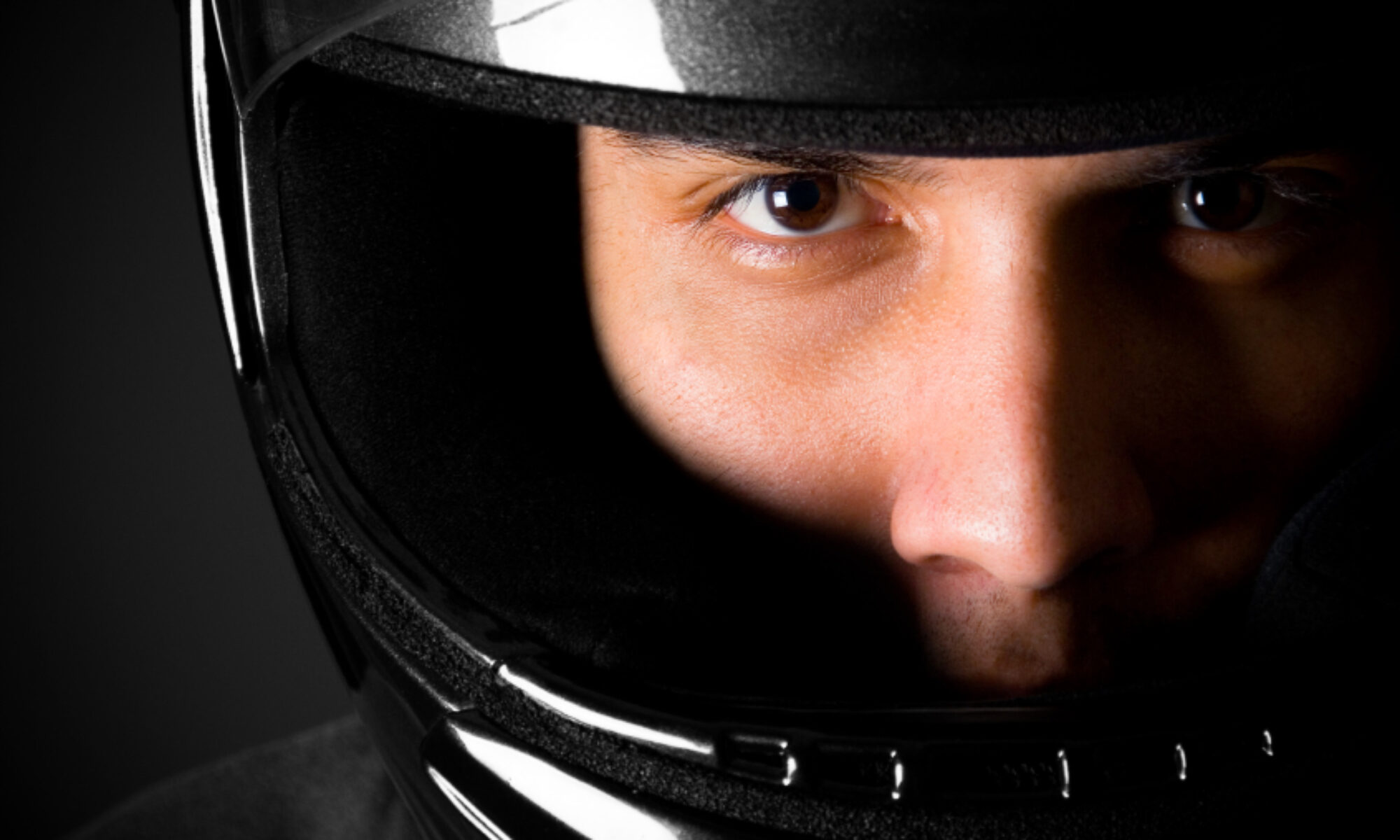
33. Eleven tips for riding in the dark

This article was obviously written before the advent of modern LED lighting, and this has a significant consequence. Low (dip) beams don’t ‘throw’ their light any further ahead than old-school halogen beams, but they do project this high (main) beams rather further. That can encourage riders to use that high beam to ride faster — I’ve heard riders claiming just that. But remember, that low beam won’t support that higher speed, particularly given something I’ve noticed — the sharp low beam cut-off from LED headlights. The actual safe reaction distance is often much shorter than main beam reaches, and that’s a serious issue when we meet an oncoming vehicle with its own ultrabright LEDs. At the same moment we’re dazzled, we dip our own beam and our view of the road ahead vanishes. I’ve also observed that whilst high beam illuminates far ahead, peripheral areas are left in comparatively deep shadow; the sort of shadow that may hide a wild animal. My brother has just fitted auxiliary lights to his own bike for precisely this reason.

I also talk about upgrading lights. Rather bizarrely, motorcycles are outside the legislation restricting the use of LED bulbs to vehicles fitted with a headlight designed with an LED bulb as original fitment. So in theory, you’re good to go ahead and fit an LED to replace an older halogen. Just one problem. Many cheap LED bulbs on the market have poor beam patterns, others are actually dimmer than the halogens they replace. My brother has experienced both issues out in the US. And legally, replacement LED bulbs should be e-marked for use on the road. A buddy of mine bought a ‘road-legal’ Osram LED bulb sold as a straight replacement for motorcycle use, but found the bulb was NOT marked. It appears that it’s not road-legal after all.


Eleven tips for riding in the dark

Once a year, the summer evenings draw in and from October through till March we are often riding in the dark, often to and from work. Once we lose the long daylight hours, how can we sharpen up our night riding? Here are eleven ways to deal with the darkness.

Avoid dark visors – whilst useful riding directly into a low sun, half an hour after sunset they are a liability. They flatten shadows, making it more difficult to spot potholes and damp patches. Whilst it is possible to swap to a clear visor, a far better option is an internal sun shade (but keep it clean and scratch-free) or wear shatterproof sunglasses which can be taken off when the sun goes down.

Fit a new visor – this should be obvious; if the visor is at all damaged, fit a new one. It’s always amazing at how those tiny, almost invisible scratches make it harder to see at night. If I need to replace the visor, I nearly always do it for autumn so I have the best possible vision through the winter. Keep it clean and scratch free. A few years back RiDE advised against using furniture polish claiming it “can make the plastic go brittle”, but for the last twenty years I’ve followed the advice of an Arai helmet technician who should know what he’s talking about, cleaning my visor with Mr Sheen. Spray on, cover with a damp tissue, leave for a few minutes, then wipe off and polish with a soft cloth. The film of wax helps rain drops bead up and run off, and protects the visor from grit and bugs, which lift off the surface more easily – the result is less damage to the antiscratch coating. It’s worked so well that the last visor outlived the helmet. But do avoid Rain-X – it is intended for glass and destroys the antiscratch coating and should be avoided.

Check, clean and adjust the lights – check all bulbs actually work – it might sound obvious but as soon as dusk falls, I see plenty of riders with a missing tail light. Ensure the headlamp lens is clean (the inside too if you can reach it) then get the headlamp aim right. Illuminating tree tops won’t help us see but will annoy drivers coming the other way. Too low and we won’t pick up hazards till too late.

Upgrade the lights – a 60/55w halogen bulb is the legal maximum, but check that’s what is actually fitted. Some twin headlight set-ups use low power 35/35w or 45/45w bulbs. Check your alternator output but most bikes over 250cc will cope with a single 60/55w bulb. If you have twin headlights, be a little more careful. If, after fitting, you detect no more light it may be you need to fit a relay – some Hondas need this. An easy upgrade to a standard 60/55w bulb are Xenon bulbs – they are a legal 60/55w but offer higher light output – up to 150% according to the advertising – and having tried them they are definitely brighter. Avoid the ‘bad weather’ blue/yellow bulbs if riding on unlit roads. They look cool, and might help to distinguish a motorcycle in urban traffic – see my Science Of Being Seen project – but despite the claims, they really reduce the light output. And don’t fit aftermarket HID kits or LED headlight bulbs. They are illegal if not a standard fitment, and many screw up the focus of the beam too. If you have 6v electrics M&P sell 25/25w and 35/35w halogen bulbs in a variety of fitments which should be a direct replacement for your standard bulb. They also do halogen fitments for bikes with 12v non-standard fitments.

Dawn and Dusk – riding at dawn and dusk is particularly difficult. Something riders tend to forget is the sun. Near the horizon it can be blinding, and during winter it spends more time there than usual. We can anticipate the problem. Shadows reaching towards us show the sun is ahead of us, so if we’re about to ride into the sun, expect to be dazzled. It would be a good idea to slow down early (rather than hit the brakes when we realise we can’t see anything). When riding into the sun, look for road signs to warn of junctions and other hazards. When riding OUT of the sun, we can see clearly but drivers looking towards us are blinded, particularly at junctions. Be particularly careful if the road surface is wet – the combination of direct and reflected light can be absolutely blinding. Immediately after the sun has set comes the most difficult driving time – twilight. The eye is adjusted to the lighter sky, which makes it difficult to see where the shade is deep. Take extra care.

Riding under street lights – where roads are well-lit, it can be almost as easy to see as in daylight, but where the lighting is not so good, we need to pay attention to areas in deep shadow and to remember that other drivers’ lights will be concealing us so we’re harder to spot. But don’t be tempted to ride on main beam “to be more conspicuous”. The glare from the light obscures the bike behind it.

Riding on unlit roads – this presents another challenge althogther. We’re limited by how far our lights show the road ahead, but don’t forget – it doesn’t matter how good our lights are, as soon as we need to dip the main beam, our long view will be cut short. No matter how good the lights, set your speed to ride well within the ‘distance you can see to be clear’. Look as far ahead along the route as possible – don’t just concentrate on the patch of light but search out road markings and signs to help work out where the road goes. Even in the country, it is very rarely pitch black and we can often get a clue where the road goes from the outlines of hedges and trees – but like these clues in daylight just don’t rely too much on them. Other vehicles lights will often give an idea of where the road heads. A glow ahead will usually be warning of a junction or roundabout. A single light often marks a side road. We can try to position to ‘see and be seen’ but remember that our lights probably won’t stand out from vehicles behind us. There’s some evidence that twin headlights can be mistaken for a car a lot further off. There is no point in blaming the SMIDSY driver, and trying to make eye contact in the dark is pretty pointless. We need to be ready to take evasive action. When other vehicles are approaching, try not to look directly at the beams, but to the left and the nearside edge of the road. Having a good idea of what lies ahead comes in useful. A line of tiny lights appearing over a crest is a truck. Dip lights early because the driver sits high above his own lights. Another biking annoyance is sitting right behind the car ahead, when our higher lights shine straight in the back window of the car and blind the driver. But if there are no reasons not to, use main beam – an astonishing number of riders seem to use just dip! Don’t forget that it also warns drivers ahead and out of direct line of sight of our presence.

Learn about cats-eyes and reflective marker posts – if they’re on the road, use them. Amber cats-eyes mark the right edge of the road, red mark the left edge, green ones are found where you can leave (or others join) via a sliproad. White cats-eyes separate lanes. Similarly, white marker posts will always be found on the right, red on the left. If white cats-eyes in the middle of the road get closer together, we’re approaching a hazard – it’s the same as the hazard line. Learn the difference in markings between lanes and slip roads – that will help you avoid the crash I had years ago when I ran off the A1 late at night in heavy spray. Following the left kerb, I went up a slip road leading to a Little Chef and ended up on my backside sliding over wet grass. Kerbs can and do disappear into side roads, bus stops, drive ways and ditches. Watch out too for awkwardly positioned central islands and width restrictor ‘pinch-points’ installed as traffic calming. They are often poorly marked and hard to spot at night.

Avoid ‘advanced’ positioning – a more ‘middle of the road’ line will give us room for manoeuvre if we don’t read a bend correctly, but avoid the temptation to turn in too early. Nor do we want to be braking hard approaching bends – the headlight beam will dive as well as the forks. Get off the brakes and on the gas before steering, so the machine and beam are levelled out before we have to steer. On left-handers, the beam will tilt to light up the outside of the turn and dazzle on-coming drivers. But the part of the beam illuminating the nearside will move back towards us, which doesn’t help in seeing where the road goes. Although most bikes have a reasonable spread of light allowing us to see round corners to some extent, a few – like my old CX500 – are focussed like laser beams. It made a thirty hairpin alpine pass a ‘never-to-be-forgotten’ experience. To see around corners, dip often has a better spread than main beam. It’ll also work a bit better coming over the brow of a hill than main beam. We can get a bit of extra light on dip by using the headlamp flasher button to illuminate main beam too. But only for a second or two – any longer will melt the fuse! And avoid accelerating until it’s clear where the road goes next. The slow-in, late turn ‘Point and Squirt’ approach works just as well in the dark as it does on blind corners – because effectively a dark corner IS a blind corner.

Dealing with cars on main beam – a common problem is encountering a driver with headlights blazing on high beam. If we dip our own lights promptly when we see the lights of a vehicle coming the other way, it’s usually enough to get the other driver to return the courtesy. If they still forget, a quick flash of main beam usually wakes them up. But in some cases, the problem is a car with badly-adjusted beams or which is heavily loaded.

If we’re not seen, we might be heard – even though it’s technically illegal to use the horn in a built-up area between 11:30pm and 7:00am, if I thought a driver hadn’t seen me, I know what I would do!

If you need some help on getting used to riding in the dark, why not check out the Survival Skills ‘Basics’ course? We start just before it gets dark, ride through the twilight and into full darkness to see how our perception of the road changes and have a chance to employ the strategies in this article.