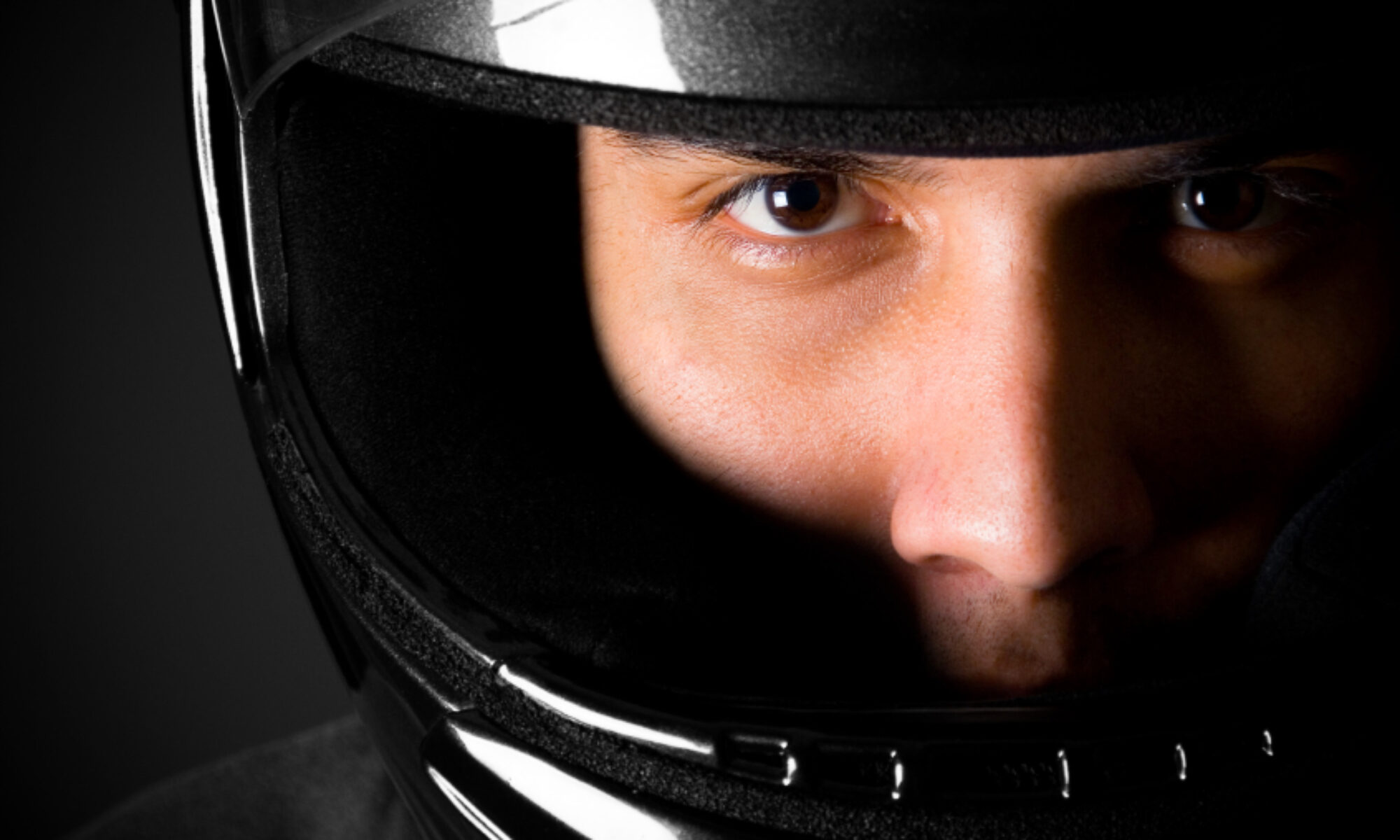
This is another early article which seeks to understand the ‘Sorry Mate I Didn’t See You’ SMIDSY collision between a motorcycle and a car, and to go beyond the simplistic “the driver didn’t look / didn’t look properly” ‘explanation’ relied on by road safety. SMIDSYs remain the leading cause of motorcycle crashes at junctions. The focus on human perception limits, positioning, and proactive riding is fully consistent with modern collision research and advanced rider training. A few years back I gave it a mild re-write to make it a little clearer, fixed some typos and added some extra comments based on my more recent investigations on motion camouflage, peripheral blindness, saccadic masking, size-arrival effect, and workload. The analysis remains accurate and supported by contemporary cognitive science and traffic psychology. As I explained in the earlier article, it’s important for us motorcyclists to realise that the SMIDSY is a ‘Two to Tangle’ collision. That is, if the driver SETS UP the conditions in which a crash CAN happen, the motorcyclist still has to RIDE INTO IT to complete it. That means most junction collisions are avoidable.
Seven reasons SMIDSYs happen
Another day, another ‘biker down’ forum thread. What happened? The rider is minding his own business on a main road, a car pulls out from left, the rider doesn’t manage to take evasive action and takes a trip to hospital in the back of an ambulance. It’s so common, it’s something that virtually all riders are aware of.
Unfortunately, along with the ‘get well soon’ messages, it also generated the usual non-thinking “drivers kill bikers” responses. So, let’s drag ourselves out of the blame culture the entire country seems to be slipping into, and see if we can work out why the “Sorry Mate, I Didn’t See You” SMIDSY crash is still happening, one hundred years after the first intrepid riders powered off on two wheels.
One of the common factors revealed by accident analyses by expert collision investigators is that many of these crashes COULD be avoided IF the rider:
- saw it coming
- responded in time
But looking at crash stats we’re no better at avoiding them than motorcyclists back in the 1950s. Collisions at junctions remain the most common collision between a car and a bike. So here are SEVEN REASONS SMIDSYs HAPPEN.
There are some pretty well-documented problems.
1 – the ‘See and Be Seen’ issue – we have to be where the driver can physically see us for him to have a chance.
This is still one of the toughest concepts for riders to get their heads round, not least because so many safety campaigns are aimed at drivers and telling them to ‘look twice’ or ‘look harder’ for bikes. But it’s no good the driver looking harder if we’re in the wrong place. If the driver’s to have a chance of making the right decision, we have to open up a line of sight to the driver’s eyes. Before anything else, we need to do is to LOOK for places where vehicles pull out. If we do that, then we can work out what the driver can and can’t see, and POSITION our bikes where the driver has a chance of seeing it. It’s no good knowing the junction is there if we’re in the wrong place; unless Superman is driving we’re invisible.
[Recent stats suggest that around 1 in 5 junction collisions happen when the rider isn’t where the driver could see the bike. It’s not just roadside furniture but also the internal structures of the car too. We NEED that line of sight to the driver.]
2 – the ‘camouflage’ effects of lights and multi-coloured bike/clothing – riding lights, hi-vis and bright clothing don’t necessarily help you be seen.
Ever since the 1970s, it’s been assumed that if bikes are hard to see, then using day riding lights (DRLs) and hi-vis or light-colour clothing would drivers spot them. Early laboratory research appeared to support that theory. In fact, when we look at accident statistics, there’s little evidence for a significant change – we have just as many ‘looked but failed to see’ collisions at junctions as we ever did.
First of all, hi-vis clothing depends on making a contrast with the background. Ever looked at a yellow hi-vis vest against spring foliage? Almost the same colour. An orange bib will be invisible if you happen to be outlined against autumn leaves or an RAC van. Oddly enough, the colour that probably stands out best is pink – ask yourself how often do you see something pink as you ride? Nothing in nature and few buildings or vehicles!
Meanwhile, Multicolour clothing and paint schemes tend to break up the solid shape that the brain detects as ‘bike and rider’. It’s known as dazzle camouflage and has been used to hide targets by disguising their outline. The visual recognition system in the brain works by recognising shapes the brain has memorised and ‘flagging’ them for more attention (think vintage car owners waving at each other!). Break up the outline and there’s a risk that the a bike doesn’t leap out amongst other traffic and shout “BIKE”, and you can vanish from the driver’s perception. I well remember a tale told by a friend of jumping out of her skin when confronted with two ghosts in the local churchyard, one with no legs, the other headless. It was only when they greeted her that she realized it was two locals from the village. The woman’s shock of grey hair vanished against the grey stonework of the church and the man was wearing dark grey trousers that were invisible against the sloping path behind them. There’s also evidence that lights can actually hide the bike behind them, particularly if you are one of those riders who ride on main beam. The blur of light makes it difficult to pick out size (and thus distance) and speed.
3 – the difficulty of picking up an object headed directly towards us – a motorcycle approaching a driver at a junction isn’t moving across the background because it’s on a near-collision course until the last couple of seconds. ‘Motion camouflage’ – our difficulty in detecting something that is moving straight towards us – and the consequent ‘peripheral blindness’ were known about decades ago in the biological sciences and are behind the hunting patterns of many animals. But only recently has the issue been recognised as applying to humans attempting to detect other vehicles. The suggestion about a positive change of line came originally from an instructor buddy of mine. The eye IS sensitive to lateral movement in peripheral vision, and he develop the idea further into the Z Line, which I talk about in my Science Of Being Seen (SOBS) presentations, and also on the SOBS blog at http://scienceofbeingseen.wordpress.com
And that assumes we’re looking in the right place. The eye only has a very narrow cone of clear focus. The rest is blurry peripheral vision. When searching around a scene, we aim this focused vision at specific points which attract attention (see the comment on shapes above). By jumping from point to point, these ‘fixations’ create a picture of what’s around us. But not everything attracts attention. So our bike could be missed as we move our eyes and fall into a ‘saccade’. It’s known as saccadic masking.
4 – experienced drivers fail to scan the whole distance between where they are and the gap they are about to emerge into – it appears they subconsciously assess the kind of road they are emerging onto and look straight into the distance – a bike CLOSER than that gap will be out of the central focus and thus will be invisible until the movement across the background is noticed in peripheral vision which will only happen when the bike is right on top of the viewer (see 3)
This is a learned ‘energy-saving’ phenomenon. The brain consumes huge amounts of the body’s energy supplies so it employs techniques that reduce energy consumption, and one of those techniques is learning short-cuts that have the same effect. We’re taught to look for vehicles when we are waiting to emerge at junctions, but it’s not a very effective strategy on a busy road, because what we need to spot are the gaps! Research initially suggested this was a problem for experienced car drivers who learned by experience, but other studies have suggested ALL road users – motorcyclists included – learn very rapidly indeed that a strategy of ‘looking for other vehicles’ fails at busy junctions, so that we switch to searching for gaps. In nearly every case, it works (if it didn’t, every single junction would be littered with smashed cars) but occasionally it doesn’t. The risk now is that a vehicle close up to us goes missing because we’ve focused behind it on the gap. And we pull out, unaware there is a vehicle between us and the gap. It’s often a motorcycle but whilst some research suggests that whilst drivers make just as many SMIDSY errors in front of other cars (which we might expect), other research indicates that – adjusted for exposure – motorcyclists also pull out in front of other motorcyclists almost as often.
5 – the emerging driver has to look two ways at once… this automatically much more than halves the amount of time he has to see you (think about it – he has to turn his head then refocus in your direction!). Just because you’ve had the driver in clear sight for 10 seconds and thus have had plenty of time YOURSELF to identify and assess the risk, doesn’t mean the driver has had more than a couple of seconds to spot you – and if he looked in the wrong place….
This comment highlights the ‘Two to Tangle’ issue – the rider caught out by the SMIDSY crash can normally see it coming for several seconds before things start to go wrong, but doesn’t use this time effective to prepare. It also hinted at the driver’s problem of ‘saccadic masking’, which is an effect where our vision shuts down when we’re turning our heads quickly – it’s to help preserve balance and prevent the nausea caused by the background rushing past our eyes – think travel sickness. The very latest research – in September 2019 – also suggests that when traffic gets heavy, drivers don’t just lose track of motorcycles, they forgot they saw one. It’s another weakess of the brain – it has a limited ‘buffer’ in which these short-term visial memories can be held ready for processing.
6 – the effect of size – Even when we do spot a motorcycle approaching, it’s difficult to judge speed and distance correctly when it’s heading straightwards us. Viewers overestimate distance and underestimate speed of small objects. Drivers have trouble spotting bikes, and then even more trouble working out where they are and how much time the driver has to make the manoeuvre. Known as the size-arrival effect, which leads to drivers under-estimating speed and over-estimating distance of bikes compared with cars and vans.
7 – the emerging driver has a very complex set of tasks – they have to engage the right gear/slow/stop/steer on the final approach, check both ways, make sense of the information being gathered and plan their own manoeuvre.
By comparison, the approaching rider has a much more simple set of tasks – spot the vehicle at the junction, decide if they can be seen/have good clearance/are on a good bit of surface, decide if they need to slow. This led me to look more indepth at the concept known as ‘workload’, which I’ve talked about in another article. It’s significant – the driver looking to turn out of a junction has a LOT more to monitor than the rider approaching the junction.
FINALLY…
Whatever the reason for a SMIDSY, it makes sense to be proactive – to make preparations for things going wrong – check behind, cover the brakes (possibly even set them up by applying them lightly) and prepare to brake or swerve. Then we’re much less likely to be taken by SURPRISE! and require our own ambulance trip to hospital.