Fresh Start: THROTTLE Core Skills
In this third article in this ‘Core Skills’ series, I return to the essential riding foundations and rebuild them from the ground up in a fresh way, using a brand-new structure too. Today it’s time for a Fresh Start look at the throttle.
#freshstart, #coreskills
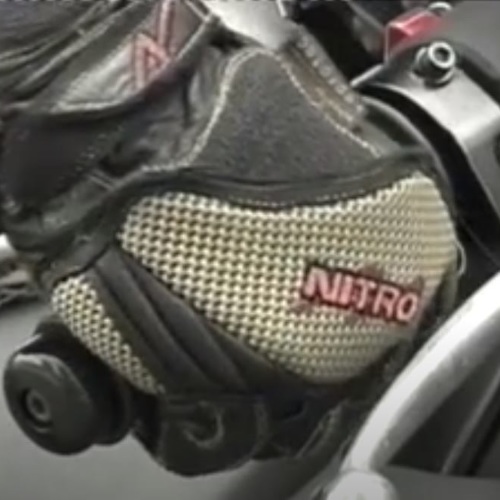
THE MYTH — “Throttle is just for speed.”
Many riders treat the throttle as nothing more than a speed control: twist to go faster, roll shut to go slower. But the misconception is that speed is the only thing the throttle changes. In reality, how and when the throttle is used is a primary factor in what riders perceive as instability.
This is because every throttle input creates a front-to-back ‘pitch moment’ about the bike’s centre of mass, shifting load between the tyres. This load transfer forces the suspension to move into a different part of its ‘stroke’, which alters the rake and trail, which in turn directly changes how the bike steers.
It’s this combination of suspension and steering that directly affects how the bike ‘feels’ to the rider:
1. The position in the stroke dictates the compliance of the suspension; it determines how effectively the bike can soak up road surface irregularities. Indeed, the latest ‘semi-active’ and ‘active’ suspension systems are designed specifically to counter these forces, using algorithms to adjust damping in milliseconds to mitigate the instability caused by poorly timed throttle inputs.
2. The importance of the throttle as a ‘chassis-control tool’ is the reason for the development of “funny front ends” which aim to separate steering forces from braking / pitching forces. These include the Hub-Centre Steering on a Tesi H2 or the Yamaha GTS1000, and BMW’s Telelever system as a replacement for conventional telescopic forks.
At the same time, the tyres must share a finite amount of grip between cornering and braking/drive forces. Any change in throttle reallocates that grip budget — which is why abrupt inputs can upset the bike’s stability, especially mid-corner.
Understood properly, the throttle isn’t just a speed tool — it’s a primary chassis and stability control. It is the rider’s most direct way to manage the bike’s geometry, balance, suspension compliance, and grip reserves in real-time.
THE MECHANISM — How throttle, load and grip actually work
The throttle does two things at once: it changes the bike’s speed, and it changes the bike’s shape. Let’s start with the simple part. When you open the throttle, the engine produces more torque, the rear wheel drives the bike forward, and the bike accelerates. When you roll the throttle shut, you remove that drive and the engine’s internal drag creates a braking force. That change in drive — on or off — is what triggers the far more important effects on load, geometry, and grip.
1. How throttle changes front suspension and geometry
As soon as you open the throttle, even gently, the rear tyre begins to push the bike forward. That forward drive shifts some load rearwards, and this is where we need to consider the suspension design.
i. Conventional front forks extend by a small amount. The more you twist the throttle, the more drive you create, and the more the forks extend — up to the limits of the suspension. Roll the throttle shut and the opposite happens. Engine braking adds deceleration, weight moves forward, the forks compress and trail reduces.
ii. But not all bikes use telescopic forks. You may have heard of systems including Telelever, Duolever, Hossack, Earles forks or leading‑link designs. These “funny front ends” separate braking and steering forces, so they don’t dive under deceleration in the same way. They still experience weight transfer — physics doesn’t change — but the suspension doesn’t compress as much, and trail doesn’t reduce as dramatically. Under acceleration, they also don’t extend as much as a telescopic fork would. From the rider’s perspective, funny front ends modify the geometry changes caused by throttle and braking, but they don’t eliminate the load transfer when you roll on or off — the suspension just reacts differently.
iii. Mechanical anti‑dive systems systems were common in the 1980s and early 1990s, and used brake‑pressure‑activated valves or linkages to stiffen the fork under braking. Some modern bikes use electronic systems to do the same by increasing compression damping when the bike detects deceleration. The front doesn’t dive as much under braking or throttle‑off, so trail doesn’t reduce as sharply and the bike feels more stable when you roll off the throttle but they don’t eliminate geometry change — they simply reduce the speed of the suspension movement that would normally occur.
2. How throttle changes rear suspension and geometry
When you open the throttle, the rear wheel is driven forward by the final transmission. Let’s start with chain drive. The chain doesn’t just turn the wheel — it also pulls on the swingarm. That pull can either:
i. Compress the rear suspension (squat),
ii. Have zero effect (neutral)
iii. Extend it slightly (anti‑squat).
Belt drive machines behave similarly. Which of the three actually happens depends entirely on the relative position of the front sprocket and the swingarm pivot.
i. If the swingarm pivot is ABOVE the chain line → anti‑squat
This is the most common modern layout with the chain pulls upwards on the rear sprocket, creating a moment that tries to extend the rear suspension. This counteracts the natural rearward weight transfer from acceleration so the bike stays more level under power keeping steering geometry more consistent, and giving the bike a more stable feel on cornering. This is why many modern sportbikes feel like they “stand up and drive” cleanly when you roll on the throttle.
ii. If the swingarm pivot is BELOW the chain line → squat
Here the chain pull pushes the swingarm downwards, compressing the rear suspension, creating more rear squat under power, more geometry change, more pitch movement and potentially more traction ‘feel’, but less stability. This was common on older bikes and some cruisers.
iii. If the swingarm pivot is CONCENTRIC with the front sprocket → neutral
Mechanically, this is a cleaner system as the chain pull passes directly through the pivot, and there’s no squat or anti‑squat meaning the suspension only reacts to weight transfer, not chain forces resulting from throttle inputs. It’s rare because it complicates the chassis design, but appears on some race bikes and
certain Buell models.
iv. And then there are shaft drive machines where the torque is transmitted via a rigid rotating shaft with bevel gears in the rear hub causing the wheel to rotate. When you open the throttle on a shaft‑drive bike, Newton’s third law means the final‑drive housing reacts in the opposite direction. That reaction force is fed into the swingarm and suspension. With a simple shaft, opening the throttle causes the shaft to try to ‘climb’ over the wheel, causing rear‑end rise (“shaft‑jacking”), whilst under deceleration, the reaction is to cause the rear of the bike to squat. To eliminate this, systems like BMW’s Paralever and Moto Guzzi’s CARC use linkages to counteract the torque reaction, reducing or eliminating jacking.
This is why different bikes behave differently under power.
THE MISTAKE — Confusing the effects of Static and Dynamic Geometry
When you change the throttle setting, you’re not just changing speed, but also changing the forces acting on the bike, which in turn alter its geometry.
This becomes important when we look at how the front tyre and steering behave under load. Roll the throttle shut or add brake and you increase deceleration; weight moves forward, the forks compress and trail reduces. In geometric terms, that steeper, reduced‑trail state should make the bike easier to turn, and at light loads that’s exactly what riders feel when they use gentle trail braking to help the bike tip in and hold a line.
But this is where a lot of popular explanations go wrong. They treat geometry as if it were a single, simple variable. In reality there are two geometries at play, static and dynamic, and they are at the root of the confusion:
i. Static geometry — the built‑in rake, trail and wheelbase defined by the frame, fork angle, triple‑clamp offset and ride height. Static geometry is what can be adjusted in the shed, when you alter with preload, ride‑height adjusters or, on high‑end bikes, adjustable rake. Static geometry sets the baseline configuration.
ii. Dynamic geometry — how the baseline changes in real time as the bike is ridden. Here’s where explanations about chassis dynamics often fall short; they often focus only on changes in rake and trail, as if those alone explain steering behaviour, making statements like “braking reducing the rake / trail and makes the bike steer faster”. The reality is that the dynamic system is far more complex since the moment you load the front, you are changing the behaviour of the tyre as well.
Rather like a balloon, motorcycle tyres are pneumatic springs, though ones with a stiff but deformable carcass. As explained in the article on braking, braking applies a load, and the contact area deforms, mechanically keying into the troughs and ridges of the surface and spreading as the carcass deflects, thus increasing the potential grip available (though not in direct proportion to load). The construction of the tyre determines the precise degree of keying ans deformation.
The same contact patch also affects steering. The front tyre generates a self-aligning torque through a combination of mechanical trail (the contact patch sitting behind the steering axis) and pneumatic trail (force distribution within the contact patch). If the front wheel moves out-of-line, this trailing contact patch creates a lever arm that tries to steer the wheel (and the attached forks and handlebars) back into alignment with the direction of travel. If we didn’t maintain a counter-steering input on the inside handlebar, this would result in a tendency for the bike to stand up. Even on a neutral throttle, the vast majority of motorcycles will attempt to self-right, something very easy to test by very slightly lifting your hands off the bars. This is the often-forgotten ‘secret sauce’ of motorcycle stability.
As the front tyre is loaded and deforms under deceleration, the ‘centre of pressure’ within the contact patch shifts rearwards, increasing pneumatic trail and therefore the steering torque that tries to align the wheel with the direction of travel. The greater the load, the greater the self-centering torque.
To get a sense of the effect on the steering of loading the front tyre with deceleration forces, you could try letting 10psi out of your front tyre. The bike is still rideable, but the steering will be heavy and sluggish. That is because the flattened, enlarged contact patch has increased pneumatic trail and therefore the tyre’s self-aligning torque without materially changing steering geometry.
If an under-inflated tyre pressure makes the steering heavy all the time, rolling off the throttle increases steering effort dynamically. If the rider transitions smoothly from on- to off-throttle, the self-righting force increases progressively and is easy to manage. But if the tendency is more significant, perhaps from shutting the throttle at high revs in a low gear, the deceleration force generated can be significant. Big twins and singles also tend to generate more engine braking. This matters when we are managing lean via counter-steering. The more engine braking slows the bike, the greater the counter-steering input required to keep the bike turning smoothly.
The reverse is true; open the throttle and you reverse the process. Acceleration shifts some load rearwards, fork compression reduces, trail increases, and the front tyre’s contact patch shrinks in size and the shape and pressure distribution changes. Self‑aligning torque drops, the steering feels lighter and more neutral. That’s why a small, steady roll‑on of throttle makes the bike feel more relaxed entering a corner. What the rider feels at the bars is not geometry alone, but the result of how the tyre generates and resists forces under changing load.
At the same time, we must not forget that the tyre must share a finite amount of grip between acceleration or deceleration and cornering.
In short, dynamic geometry is a complex system, one that’s not just about changing angles, but about the continuous interaction between geometry, load transfer and tyre force generation.
———————————
IF YOU THINK THIS POST HIT THE SPOT
please pay it forward to other bikers!
Like ✔ Comment ✔ Share ✔ Follow ✔
ANSWERING QUESTIONS NO-ONE ELSE ASKS
FIND OUT how you can get Survival Skills!
👉 visit us at www.survivalskills.co.uk
👉 discover the Eight Week eCourse at
our NEW website: www.motoonline.co.uk
For all the links use the Link-in-bio page
👉 https://campsite.bio/survivalskills
———————————
THE METHOD — Managing load too, not just speed
The throttle is not just a speed control; it’s a primary tool for managing how forces move through the bike, in order to maintain a stable and predictable distribution of load and grip between the tyres.
Riders don’t control rake, trail or contact patch directly. They control inputs, and those inputs determine how the geometry and tyres behave. It’s not simply what you do, but how you do it, and in particular, how quickly you do it. Abrupt changes in throttle or braking create rapid shifts in load, suspension position and tyre behaviour. Smooth, progressive inputs allow the system to settle, keeping the tyres working within their limits. Most instability doesn’t come from accelerating or decelerating, but from how quickly the transition from one to the other occurs:
1. Make all inputs progressive, not abrupt.
2. Pay particular attention to on/off transitions.
Since stability is particularly an issue when turning, a small, steady throttle input — often termed ‘maintenance throttle’ — becomes important in helping stabilise the chassis by reducing pitching and keeping load distribution consistent. The machine usually feels ‘calmer’.
The gearbox plays a critical role since gear selection determines how responsive the bike is to every input:
1. Lower gears multiply torque, delivering more acceleration and increasing engine braking. In terms of stability, that makes the machine more sensitive to throttle changes in both directions. Small inputs produce larger shifts in load.
2. Higher gears reduce that sensitivity, softening both acceleration and deceleration, and making the machine less sensitive to throttle adjustments.
A well-chosen gear, then, is one that gives you usable, controllable drive which matches the requirement of the moment.
However, modern high power motorcycles produce enough torque in the lower gears even at low revs that the rear tyre can be pushed beyond its available grip almost instantly, particularly in low-grip conditions. To aid control, many machines come with gear-dependent torque limits in 1st and 2nd gear (and sometimes 3rd), where the ECU reduces available torque at the rear wheel. This is done via throttle mapping, ignition timing, and sometimes fuel control. The result is to limit how quickly the ‘driving’ force builds at the tyre, helping it to grip. Along with electronic aids such as traction control, these systems cannot change the underlying physics, but they can help manage it for the rider who would otherwise have to maintain tyre grip the old-fashioned way — via throttle control.
To avoid locking the rear wheel under downshifting, many bikes are now fitted with a back-torque limiting (BTL) clutch, often called a slipper clutch. Under normal drive the clutch locks as usual and transmits engine torque to the rear wheel, but under the sort of heavy engine braking caused by aggressive downshifts and a sudden release of the clutch lever, the BTL clutch partially slips in the reverse torque direction, limiting how much braking torque the engine can apply to the rear wheel and reducing the risk of a rear wheel skid.
THE MINDSET — “Smooth throttle shows good planning.”
In my opinion, observing a rider’s throttle use is a window into their mental processing. It reveals whether they are shaping their ride or merely reacting to the road.
Smooth, progressive inputs usually reflect anticipation. When a rider has assessed the road and set their entry speed early, the throttle becomes a tool for stabilisation, particularly in corners where the throttle allows the rider to shape the forces acting on the motorcycle. Conversely, hurried throttle “grabs” or mid-corner throttle “chops”, as well as large changes in throttle opening, are almost always downstream indications of poor earlier choices and last-moment decisions, perhaps representing missed information. But they can also reflect something more ingrained: a belief that aggressive or abrupt inputs are the correct technique. In that case, the problem isn’t just timing, but the underlying model the rider is working from.
‘Coasting’ approaching hazards, and particularly on the approach and the first part of a corner is a particularly telling habit. In this context, coasting doesn’t mean travelling at a constant speed, but the state of ‘mental stall’ where the rider is neither committing to drive nor actively managing deceleration.
By contrast efficient throttle timing — whether that’s acceleration, maintenance throttle or deceleration — to set speed early and get the chassis working with the rider helps reduces cognitive workload. With the chassis is settled, the rider frees up mental bandwidth for what actually matters; observation, hazard awareness and assessment, and deciding on a suitable course of action in good time, rather than fire-fighting instability. Smoothness, therefore, isn’t a stylistic choice or a synonym for “riding slowly.” It is the visible evidence of clear priorities and early decisions.
THE MARGIN — “Throttle timing protects grip, geometry, and stability.”
Throttle errors are usually but not always survivable — a long time back I crashed via the simple act of closing the throttle. Looking back I worked out why:
1. The road surface was slick — cold, wet, polished tarmac and covered with sugar beet sap. It was so slippery I stood up and promptly fell over again.
2. I shut the throttle abruptly — that created a rapid forward load transfer, increasing the demand for front tyre grip almost instantly..
3. I was just starting to steer into the bend — with so little grip available, the front tyre was already near its limit; the additional demand was enough to exceed it, and it let go immediately.
There was nothing I could do about the slick surface, and nothing I could do about the bend either. The only variables I controlled were the timing and rate of my off-throttle input. Even allowing for the slippery surface, the front tyre may have been able to handle the cornering load — after all, the rider I was following got round the bend — but tyres struggle with the ‘spike’ caused by sudden loading. An earlier, smoother, more progressive roll-off would have increased the demand on the front tyre more gradually, let the suspension settle before I started to steer, and this may have kept the total demand for grip within the tiny margin available.
That is the margin: not eliminating errors entirely, but ensuring that when they happen, they develop slowly enough to be managed.
SUMMING UP — “This is a ‘core skills’ review”.
This is an overview of throttle skills, a bit more than a ‘throttle basics’ primer for new riders, but not a full ‘advanced riding’ treatise and it doesn’t include the situations where we are going to need throttle control. The intent is to offer a starting point for a ‘skills reset’ and a way to (re)build the foundations that every rider relies on, from CBT graduates to experienced veterans.
===================
WANT A FULLY-STRUCTURED BOOK ON
ADVANCED RIDING? WRITTEN BY A
QUALIFIED & EXPERIENCED RIDER COACH?
CHECK OUT ‘Survival SKILLS’ – the guide to
advanced riding that doesn’t tell what to do
but helps you develop your skills In your own
time, at your own pace, anywhere in the world!
ORDER THE PAPERBACK:
http://lulu.com/spotlight/SurvivalSkills
INSTANT eBOOK DOWNLOAD:
https://ko-fi.com/s/2362ab146d
===================